What awaits a recruit during the first week of SOF training?
Explaining what will your first week of training in SOF be like.
The first week of training in the Special Operations Forces (SOF) is a defining испытание that lays the foundation for future service. Recruits face physical, psychological, and intellectual challenges that test their endurance, determination, and readiness to become part of the elite of the Armed Forces of Ukraine.
Below is an overview of how the first week of SOF training unfolds: the daily routine, physical training, theoretical instruction, and real stories from operators who have already gone through this path.
Primary Objectives of the First Week
The first week of training in SOF is the period during which a recruit must prove readiness for service. It involves not only physical challenges, but also psychological adaptation, familiarization with military discipline, and acquisition of new knowledge and practical skills.
1. Establishing Discipline
In SOF, discipline is a core element of successful mission execution. For this reason, the first week begins with familiarization with rules and standards of conduct that are mandatory for every operator.
Fundamentals of military discipline:
Strict adherence to the daily schedule
Unconditional execution of commanders’ orders
Maintaining cleanliness and order in living and training areas
Development of team interaction:
Recruits learn to function as a single, unified mechanism
Tasks are often performed in pairs or groups, fostering mutual support and trust
True story:
“On the third day we faced a team challenge. We had to carry heavy crates together across an obstacle course. Some were faster, some stronger, but success depended on whether we helped each other. That was when I first realized that discipline is more than just orders,” — recalls Andrii, an SOF recruit.
2. Physical Training
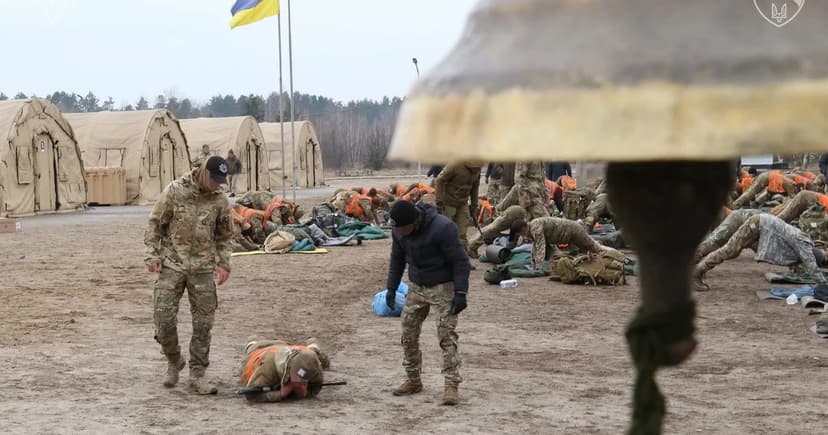
Physical endurance is an essential trait of an SOF operator. The first week tests the recruits’ baseline fitness and marks the beginning of systematic work to build strength and endurance.
Daily physical load includes:
Medium- and long-distance running (5–10 km)
Exercise circuits: pull-ups, push-ups, squats, planks
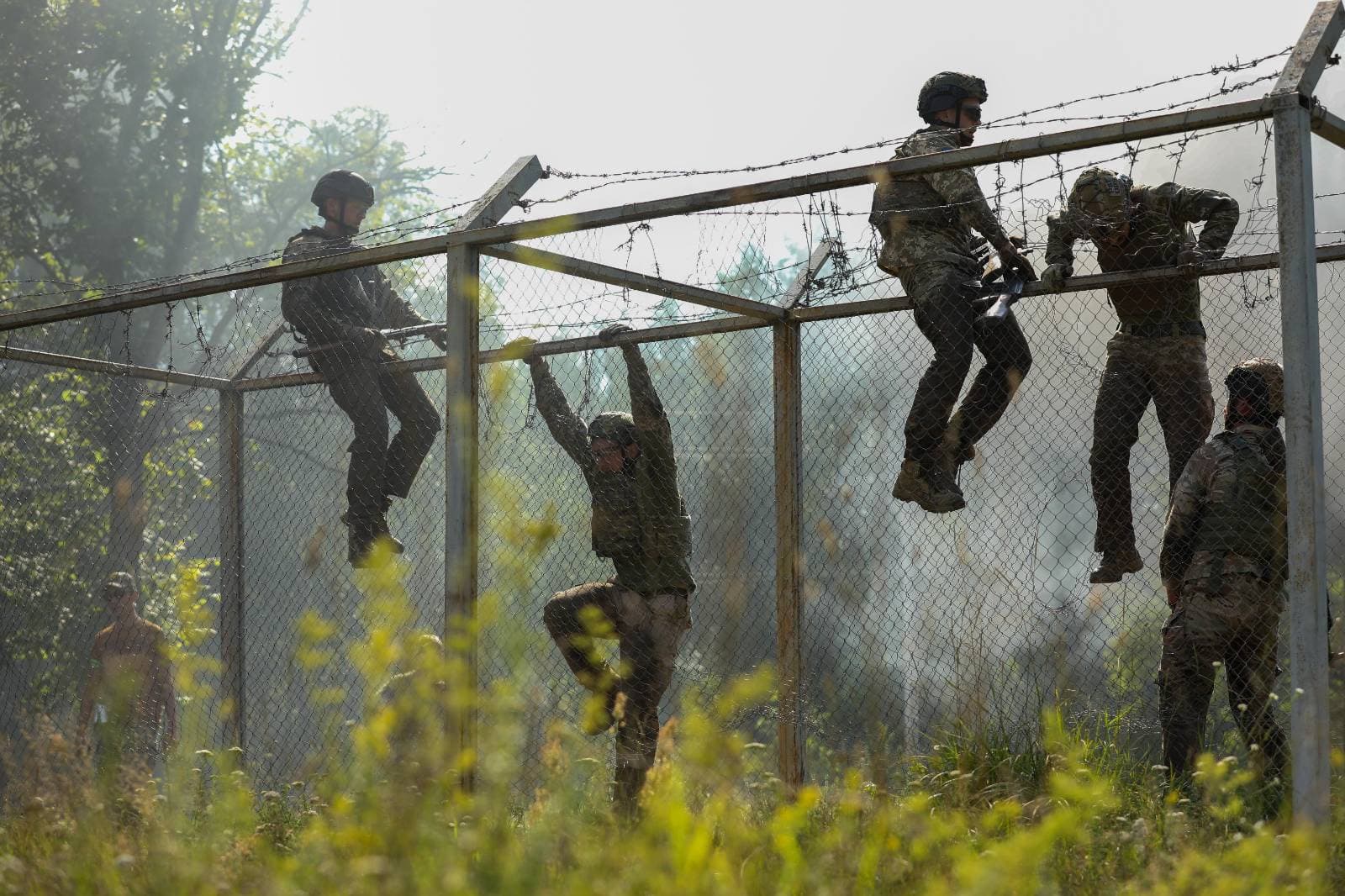
Obstacle course training simulating real combat conditions
Adaptation to continuous physical stress:
Recruits learn to operate under physical fatigue
The primary objective is to develop resilience required in field conditions
True story:
“The first time we were told to run 10 km, it was tough. But everyone ran together, supporting each other, and we made it. That gave me confidence that I could overcome any obstacle,” — shares Maria, an SOF recruit.
3. Theoretical Instruction
SOF recruits are expected not only to be physically strong, but also highly trained in tactics, strategy, and technical fundamentals. The first week includes core theoretical knowledge required for future operations.
Tactical fundamentals:
Principles of small-unit operations in combat
Land navigation
Selection of cover and use of terrain for protection
Weapons familiarization:
Introduction to the structure of small arms
Theoretical overview of different weapon systems
Basics of ballistics and shooting accuracy
Survival basics:
Finding water and food in field conditions
Shelter construction
Use of natural resources to accomplish tasks
True story:
“During the first theory class, we were taught how to navigate using a map and compass. It seemed simple at first, but when we were sent into the forest for a task, it became clear how important every detail really is,” — says recruit Dmytro.
4. Motivation and Psychological Training
Psychological resilience is no less important than physical fitness. Recruits work with psychologists who help them adapt to stress and strengthen motivation.
Motivation-focused work:
Understanding personal goals and one’s role within the team
Learning to control emotions under stress
Preparation for demanding conditions:
Simulation of high-risk scenarios
Interactive exercises emphasizing the importance of teamwork
True story:
“The psychologist told me that if I made it through the first week, everything afterward would feel easier. Those words motivated me, and even in the hardest moments I remembered: this is just the beginning, and I can handle it,” — recalls SOF operator Oleksii.
5. Practical Skills Development
Theory is immediately reinforced with practice. Recruits begin learning essential skills required in real combat conditions.
Weapons handling:
Initial live-fire training
Learning weapons safety procedures
Tactical movement:
Movement in small groups
Use of cover to reduce risk
Combat medicine:
Tourniquet application
Bleeding control
First aid in field conditions
True stories:
“I never thought I would be able to properly apply a tourniquet to a wounded limb. After several training sessions, I could do it in seconds, knowing that in reality it could save someone’s life,” — shares Andrii, an SOF servicemember.
Maria, one of the few women in the group, recalls her first experience with weapons:
“I had never held a rifle before. The instructor patiently explained how to aim and fire correctly. The first shot brought mixed emotions—fear and confidence at the same time. After a few days, I already felt comfortable.”
The First Week of SOF Training: The Beginning of the Path
The first week of SOF training is the foundation upon which further service is built. Every task and every day is a test of physical strength, intellect, and spirit. Recruits who pass this stage gain the base that prepares them for the most demanding missions.
This week teaches endurance, teamwork, and discipline—transforming civilians into future elite operators.
For those who dream of serving in SOF, it is important to remember: motivation and readiness to work are decisive. Your resilience and strength of spirit can become the key to a new life.