How to survive without water and food: SOF survival tactics
Explaining how to survive in harsh conditions without water and food.
In the most extreme situations, Special Operations Forces (SOF) operators demonstrate endurance, adaptability, and knowledge that allow them to survive even when all resources seem exhausted. Prolonged lack of water or food is a serious test for the human body, but proper preparation and sound tactics make it possible to endure such conditions.
Principles of Survival Without Water and Food
Survival in the absence of food and water depends not only on physical endurance, but also on the ability to act correctly, conserve resources, and adapt to the environment. Below are key principles that enable SOF operators to withstand extreme conditions.
1. Water Is the Highest Priority
The human body can survive up to three weeks without food, but only a few days without water. Dehydration causes weakness, dizziness, loss of concentration, and even unconsciousness. Therefore, the primary task in any survival situation is to find water or conserve the moisture already in the body.
How to conserve body moisture
Minimize movement. Increased activity leads to sweating and fluid loss, especially in hot conditions.
Seek shade. Avoid direct sunlight, particularly during peak hours. Protect the skin with clothing or create improvised shelter.
Breathe through the nose. Mouth breathing accelerates moisture loss.
Ration water carefully. If water is available, drink in small sips and spread consumption over time.
How to find water in the field
Dew collection. In the morning, collect dew from grass or plants using absorbent cloth, then wring it into a container.
Condensation. Place plastic bags around leafy branches. Sunlight causes moisture to collect inside the bag.
Rivers and ponds. Even clear-looking water must be boiled or filtered to prevent infection from bacteria or parasites.
2. Energy Management Without Food
A person can survive longer without food than without water, but energy reserves are depleted quickly. The main objective is to reduce energy expenditure until food becomes available.
How to conserve energy
Rest whenever possible. Avoid unnecessary movement.
Move slowly and deliberately. If movement is required, avoid sudden or rapid actions.
Set priorities. Focus only on critical tasks such as water acquisition or shelter construction.
How to find food
Edible plants and berries.
Learn which plants are safe in your region.
Never consume plants or berries unless you are certain they are edible.
Insects.
Insects such as grasshoppers or larvae are high in calories and often safe when cooked.
Always roast insects to eliminate parasites.
Fishing.
Use improvised lines or traps made from natural materials.
Small-game traps.
Set snares or simple traps if conditions allow.
3. Minimize Heat and Energy Loss
Maintaining normal body temperature is critical. Hypothermia or overheating can rapidly degrade physical condition.
How to prevent hypothermia
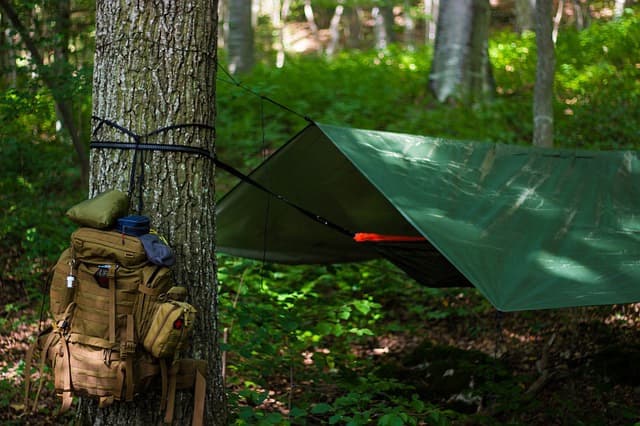
Build shelter that protects from wind and rain.
Use natural insulation such as leaves, dry grass, or other vegetation.
Avoid direct contact with the ground, which draws heat from the body.
How to prevent overheating
Limit activity during the hottest hours of the day.
Wear head covering to prevent heat stroke.
Consume small amounts of water regularly, even when supplies are limited.
4. Psychological Resilience Is the Key to Survival
Survival without water or food often depends on mental strength. Panic or loss of control can lead to failure.
How to stay motivated
Set short-term goals (find water, build shelter, start a fire).
Maintain a positive mindset—remind yourself that the situation is temporary.
Stay occupied with practical tasks to prevent negative thinking.
How to manage stress
Breathing exercises: slow, deep breathing helps maintain calm.
Visualization: imagine successful recovery and return to safety.
Real SOF Survival Experiences
Dmytro, SOF operator, recalls a mission in extreme desert heat where water supplies were depleted:
“Temperatures were above +40°C, and we were down to our last sips of water. Our first priority was shade. We built shelter using camouflage nets, then collected condensation from plants at dawn and filtered moisture from soil using plastic sheets. The hardest part was avoiding panic. Thanks to training and discipline, we survived three days until evacuation.”
Andrii, SOF reconnaissance operator, describes a seven-day training exercise without food in forest terrain:
“We established a base camp first. We gathered edible plants—lamb’s quarters, wild berries—and caught fish in a small river. Energy conservation was critical, so every action was planned. At night, we set traps for small animals. The experience proved that even in harsh conditions, resources can always be found.”
Oleksandr, SOF officer, shares lessons from a winter mountain mission:
“At elevations above 2,000 meters, water sources are scarce. We collected snow and melted it on stoves, carefully managing heat loss. The water was cold, so we drank it in small sips to preserve body energy. That mission taught us the importance of preparing for worst-case scenarios.”
Survival Without Food and Water
This is not about heroism—it is about knowledge, preparation, and endurance. SOF operators know how to use every available resource, no matter how insignificant it may seem.
Survival principles without food and water are based on three key factors:
Resource conservation
Application of knowledge
Maintenance of mental resilience
SOF personnel train daily to apply these principles under the most extreme conditions. These skills not only save lives, but also build endurance and the ability to adapt to any challenge.